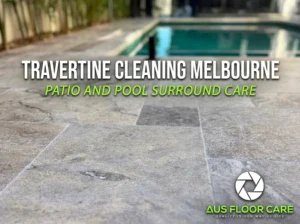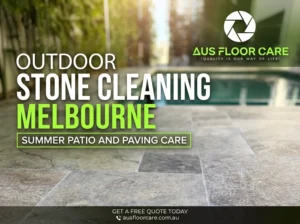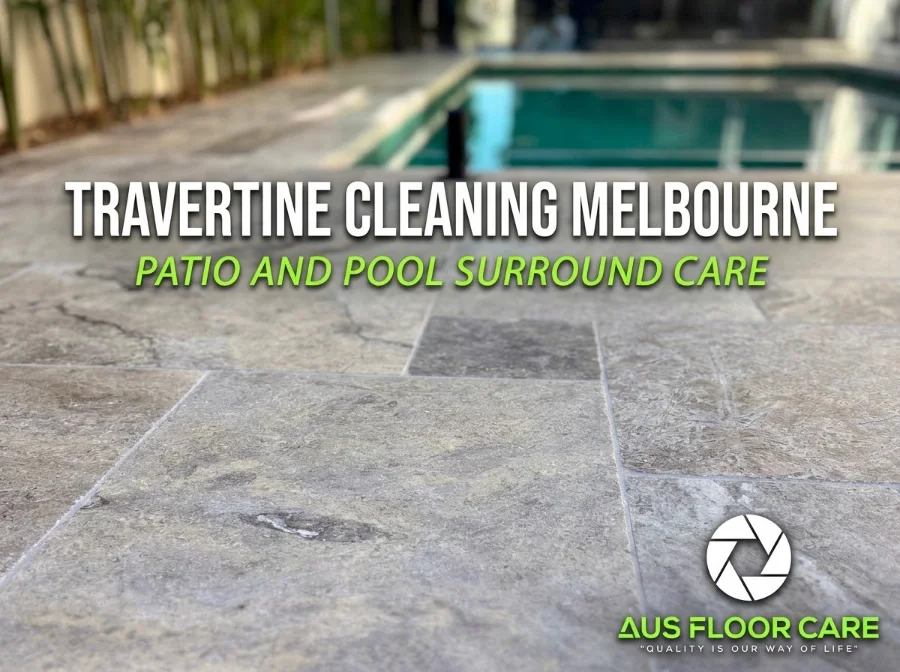
Travertine is a popular choice for patios, pathways and pool surrounds because of its natural texture and warm variation. Its porous structure and characteristic surface cavities also mean it needs the right cleaning and maintenance approach.
If your outdoor travertine has darkened, developed organic growth or become uneven in appearance, a professional assessment can help identify whether cleaning, repairs, honing or sealing is appropriate.
Why Travertine Needs Stone-Specific Care
Travertine is a natural limestone with pores and cavities that can collect dirt and moisture. Outdoor exposure adds further challenges, including rain, garden debris, pool water, sunscreen, food spills and changing temperatures.
Some travertine is supplied with filled holes and a honed finish, while other installations retain a more textured surface. The finish and installation method affect which cleaning and restoration methods are suitable.
Common Travertine Patio and Pool Problems
Outdoor travertine may develop:
- Darkened pores and embedded dirt
- Algae or organic growth in shaded areas
- Worn or missing hole filler
- Surface stains from leaves, food, oils and pool products
- Patchy colour from weathering or old sealer
- White deposits and residue around wet areas
Before treating the surface, it is important to distinguish between removable dirt, mineral deposits, staining and physical deterioration.
Professional Travertine Cleaning and Restoration
The restoration process should be matched to the condition of the stone. It may include:
Inspection: Identify the travertine finish, existing filler, previous coatings and areas of damage.
Deep cleaning: Remove suitable dirt and organic contamination with a method selected for travertine.
Hole filling: Repair appropriate cavities or missing filler where required.
Honing and polishing: Refine the surface to the selected finish when the material and location are suitable.
Sealing: Apply a compatible sealer when recommended to help reduce absorption.
Not every outdoor travertine surface should be polished to a high gloss. Texture, drainage and slip performance must be considered.
Travertine Around Swimming Pools
Pool surrounds are exposed to frequent water contact, pool chemicals, sunscreen and foot traffic. Cleaning and sealing products should be suitable for this environment and should not create an inappropriate surface finish.
Do not choose a glossy coating simply because it looks attractive when dry. Ask about the effect of the treatment on the stone’s texture, traction and maintenance requirements. Keep the area closed during treatment and until the recommended curing period is complete.
Maintaining Travertine Outdoors
To help maintain outdoor travertine:
- Remove leaves and organic debris regularly.
- Clean spills promptly using a suitable stone-safe product.
- Avoid vinegar, acidic descalers and harsh household chemicals.
- Keep drainage paths clear and avoid standing water where possible.
- Use soft brushes and suitable cleaning equipment.
- Follow the maintenance advice for the selected sealer.
Routine care can reduce build-up, but damaged filler and deeper surface problems may need professional attention.
Request Travertine Care in Melbourne
Aus Floor Care provides travertine cleaning and natural stone restoration for Melbourne properties. We can assess your patio, paving or pool surround and recommend a suitable approach for its condition and finish.
Explore our travertine care information and stone surfaces. Contact us with your suburb and photos to request a quote.


 Trustindex verifies that the original source of the review is Google.
 Trustindex verifies that the original source of the review is Google.
 Trustindex verifies that the original source of the review is Google.
 Trustindex verifies that the original source of the review is Google.
 Trustindex verifies that the original source of the review is Google.
 Trustindex verifies that the original source of the review is Google.
 Trustindex verifies that the original source of the review is Google.
 Trustindex verifies that the original source of the review is Google.
 Trustindex verifies that the original source of the review is Google.
 Trustindex verifies that the original source of the review is Google.
Stone types we Serve
What We Provide
Areas We Serve Across Melbourne