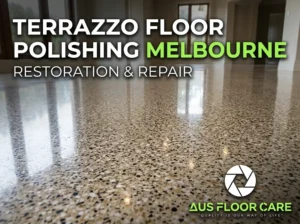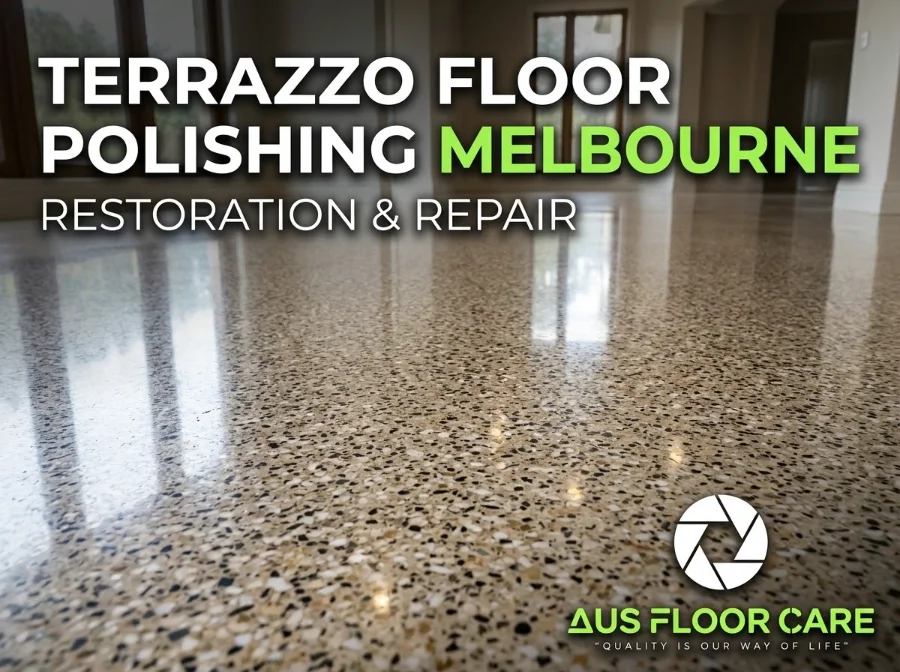
Terrazzo is valued for its distinctive mix of stone chips and binder, but years of foot traffic, unsuitable cleaning and surface wear can leave a floor looking dull or uneven.
Whether you have an older terrazzo floor in a home or a high-traffic commercial surface, professional assessment can determine whether cleaning, grinding, honing and polishing can restore its appearance.
Why Terrazzo Floors Become Dull and Worn
Terrazzo can develop fine scratches, embedded dirt, worn traffic lanes, patchy sheen and stains. Older floors may also show cracks, missing chips, worn joints or previous repairs that no longer blend with the surrounding surface.
Repeated use of unsuitable chemicals or abrasive equipment can make the finish inconsistent. Ordinary mopping may remove loose dirt but cannot correct surface wear or restore a damaged finish.
Can an Old Terrazzo Floor Be Restored?
Many terrazzo floors can be improved without removing the existing surface, provided the floor is structurally suitable for restoration. The assessment should consider the depth of wear, condition of the binder, cracks, repairs, edges and any movement in the substrate.
Restoration is not a guaranteed solution for every floor. Severe structural movement, extensive deterioration or unsuitable previous coatings may require additional work or a different recommendation.
Keeping the original terrazzo can preserve its character, especially in older properties where the material is part of the building’s design.
The Terrazzo Restoration Process
A professional terrazzo restoration may involve several stages:
Inspection: Assess the floor, identify the terrazzo type and map visible damage.
Deep cleaning: Remove soil, residues and suitable surface contamination.
Grinding: Use controlled diamond abrasives where needed to remove surface irregularities and expose a more consistent surface.
Honing: Refine the surface through progressively finer abrasives to achieve the required smoothness.
Polishing: Develop the chosen sheen and bring out the terrazzo aggregate where appropriate.
Sealing: Apply a suitable protective treatment if recommended for the floor and its intended use.
Repairs, Cracks and Missing Chips
Not all terrazzo problems are solved by polishing. Cracks, holes, missing aggregate and damaged edges may need separate repair work before the finishing stages.
Repairs can be more visible when the original aggregate or binder is difficult to match. A realistic assessment should explain the likely appearance of the repair and whether the goal is structural improvement, visual blending or both.
Ask the restoration contractor to inspect problem areas closely rather than assuming that a polishing treatment will hide them.
How to Maintain Restored Terrazzo
After restoration, maintain terrazzo with a consistent, stone-appropriate cleaning routine:
- Use a suitable pH-neutral cleaner recommended for the floor.
- Remove grit regularly to reduce scratching.
- Wipe spills promptly rather than allowing them to dry.
- Avoid acidic cleaners, abrasive powders and aggressive pads.
- Use clean water and avoid leaving excessive moisture on the surface.
- Follow the advice provided for any sealer or finish.
Maintenance requirements vary with the terrazzo composition, finish and amount of traffic.
Restore the Character of Your Terrazzo Floor
Aus Floor Care provides professional terrazzo cleaning, grinding, honing and polishing in Melbourne. We assess the existing floor before recommending a suitable restoration approach.
Explore our stone types and stone polishing services. Send photos of your terrazzo floor and your Melbourne suburb to request an assessment.


 Trustindex verifies that the original source of the review is Google.
 Trustindex verifies that the original source of the review is Google.
 Trustindex verifies that the original source of the review is Google.
 Trustindex verifies that the original source of the review is Google.
 Trustindex verifies that the original source of the review is Google.
 Trustindex verifies that the original source of the review is Google.
 Trustindex verifies that the original source of the review is Google.
 Trustindex verifies that the original source of the review is Google.
 Trustindex verifies that the original source of the review is Google.
 Trustindex verifies that the original source of the review is Google.
Stone types we Serve
What We Provide
Areas We Serve Across Melbourne