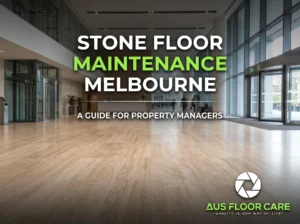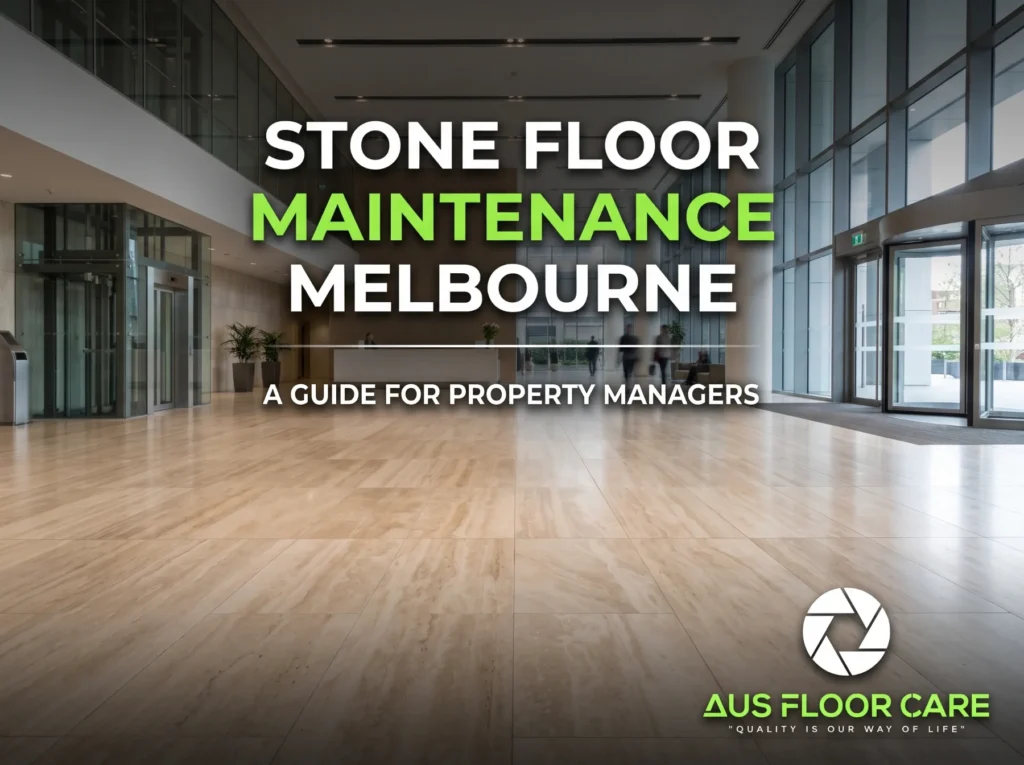
For Melbourne property managers and owners corporations, shared stone floors are part of the building’s first impression. Entrances, lift lobbies, corridors and reception areas receive constant traffic, and their condition can influence how residents, visitors and prospective tenants view the property.
A planned maintenance approach helps identify wear early, coordinate access and budget for suitable cleaning or restoration before problems become more disruptive.
Why Shared Stone Areas Need a Maintenance Plan
Common areas experience repeated foot traffic, grit, trolley movement, spills and routine cleaning. Over time, this can lead to dull walkways, visible traffic lanes, surface scratches, residue and uneven shine.
Reactive cleaning may improve appearance temporarily but does not necessarily address embedded dirt or surface deterioration. A maintenance plan records the condition of the stone and sets out when routine cleaning, professional restoration or repairs should be considered.
Key Areas for Building Managers to Inspect
Include the following areas in regular inspections:
- External entrances and internal entry foyers
- Lift lobbies on each level
- Shared corridors and stair landings
- Reception and concierge areas
- Common bathrooms and amenities
- Commercial tenancy entrances and shared walkways
Look for worn traffic paths, staining, loose tiles, damaged grout, slippery residues and areas where cleaning results vary from one visit to the next.
Choose the Right Treatment for the Stone
Natural stone types require different care. Marble, granite, terrazzo, travertine, limestone and bluestone each have their own characteristics and maintenance needs.
Routine cleaning: Remove day-to-day soil using an appropriate method and product.
Deep cleaning: Address built-up dirt and residues that routine maintenance does not remove.
Honing and polishing: Improve the surface finish where wear or dullness is suitable for treatment.
Grinding: Consider only where the floor has more significant surface irregularities and the stone is suitable.
Sealing: Review whether the material and location benefit from a compatible sealer.
Coordinate Access and Minimise Disruption
Before arranging work, confirm building access, loading and parking, lift protection, furniture movement, pedestrian diversions and the hours when common areas are busiest.
For larger properties, staged work may allow sections to remain accessible while other areas are treated. Residents and tenants should receive clear information about temporary closures, drying periods and when normal access can resume.
Any treatment should include practical site-safety controls and clear instructions for the building’s cleaning contractor.
Create a Repeatable Maintenance Record
A useful building record should include:
- Stone type and finish, where known
- Photos of key areas and existing defects
- Previous cleaning, polishing, repairs and sealing
- Approved daily cleaning products and methods
- Areas that need closer inspection
- Recommended maintenance intervals and budget allowances
This information helps future contractors understand what has already been done and reduces the risk of incompatible cleaning products being used.
Arrange Stone Floor Maintenance in Melbourne
Aus Floor Care provides professional stone cleaning, polishing and restoration for Melbourne residential and commercial properties. We can assess common areas and discuss a maintenance approach suited to the building, its surfaces and access requirements.
Explore our stone floor surfaces and stone restoration services. Contact us with the building suburb, surface type and photos to request a quote.


 Trustindex verifies that the original source of the review is Google.
 Trustindex verifies that the original source of the review is Google.
 Trustindex verifies that the original source of the review is Google.
 Trustindex verifies that the original source of the review is Google.
 Trustindex verifies that the original source of the review is Google.
 Trustindex verifies that the original source of the review is Google.
 Trustindex verifies that the original source of the review is Google.
 Trustindex verifies that the original source of the review is Google.
 Trustindex verifies that the original source of the review is Google.
 Trustindex verifies that the original source of the review is Google.
Stone types we Serve
What We Provide
Areas We Serve Across Melbourne