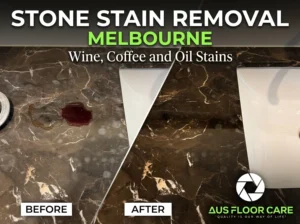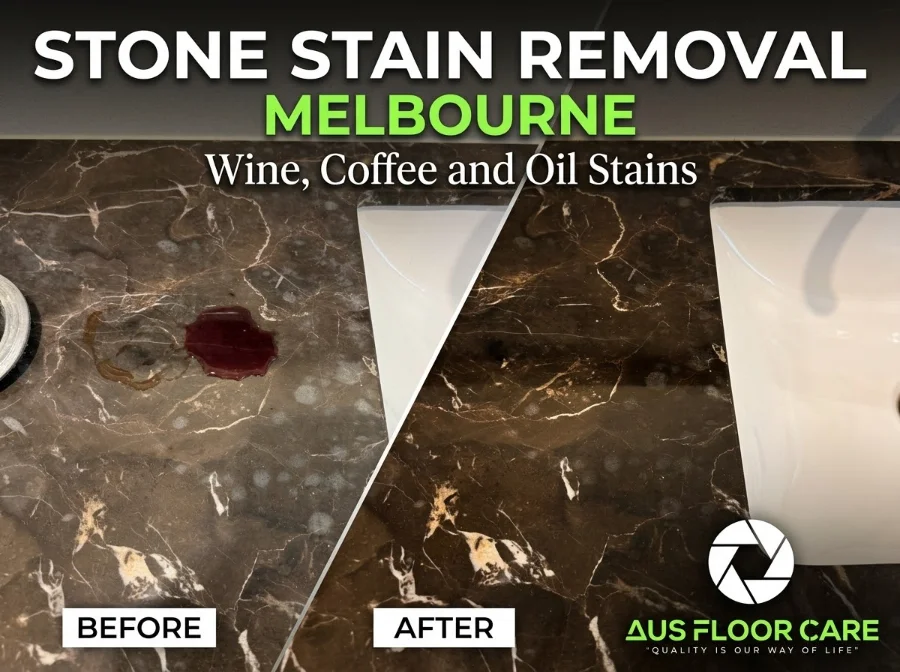
Celebrations, family meals and summer entertaining can be hard on natural stone. Wine, coffee, cooking oil and food spills may leave marks on marble, granite and other stone surfaces, especially when the surface is porous or its sealer has worn.
The first step is to identify what caused the mark. A stain, an etch mark and a mineral deposit can look similar but need different treatment. Using the wrong household cleaner may make the problem worse.
Common Stains on Natural Stone
Different substances can leave different types of marks:
- Wine and coloured drinks: May leave coloured staining on porous stone.
- Coffee and tea: Can create brown or yellow-brown marks.
- Cooking oils and fats: May penetrate and create darker patches.
- Food and sauces: Can leave pigments, oils or residues.
- Rust: May appear as orange or brown marks from metal contact.
- Hard-water deposits: Can leave mineral build-up around taps and wet areas.
The stone type, finish and depth of penetration all affect the treatment options.
Stain or Etching? Understand the Difference
A stain is material that has entered the stone and changed its colour. An etch mark is a chemical reaction that alters the surface of acid-sensitive stone such as marble and may appear dull, pale or cloudy.
For example, lemon juice can etch marble even if it does not leave a coloured stain. Oil may create a darker patch because it has penetrated the stone. A water deposit may sit on the surface rather than inside it.
Identifying the cause matters because stain treatment will not repair etching, and polishing alone may not remove a deep oil stain.
What to Do Immediately After a Spill
If a spill occurs, act calmly and avoid spreading it:
- Blot liquid with a clean, absorbent cloth or paper towel.
- Do not scrub aggressively or use an abrasive pad.
- Use a clean damp cloth if appropriate for the stone and spill.
- Dry the area and avoid applying several different cleaners.
- Record what spilled and how long it remained on the surface.
Do not use vinegar, lemon, bleach or an unlabelled stain remover on natural stone. If the mark remains, seek advice before trying a stronger product.
How Professional Stone Stain Treatment Works
Professional treatment begins with identifying the stone and the type of mark. Depending on the situation, it may involve targeted cleaning, a specialist poultice, controlled honing or polishing, or a separate repair process.
Assessment: Check the material, finish, stain colour and likely source.
Targeted treatment: Select a method designed for the contaminant and stone rather than applying a general-purpose chemical.
Surface refinement: Where etching or wear is present, honing or polishing may be considered separately from stain removal.
Protection advice: Review whether sealing is suitable and explain ongoing care.
Some stains may be reduced rather than removed completely, particularly if they are old or deep. A realistic assessment should explain this before work begins.
Reduce the Risk of Future Stone Stains
Good maintenance can reduce the chance of staining:
- Wipe spills promptly, especially oils, wine, coffee and sauces.
- Use cleaners labelled as suitable for the specific stone.
- Use coasters and chopping boards on benchtops.
- Keep metal containers and plant pots from sitting wet on stone.
- Ask whether a suitable impregnating sealer is recommended.
- Arrange professional care when stains or surface damage persist.
Sealing can help slow absorption on suitable materials, but it does not make stone stain-proof or protect marble from acid etching.
Professional Stone Stain Removal in Melbourne
Aus Floor Care provides natural stone cleaning, stain treatment and restoration across Melbourne. We assess the stone and the type of mark before recommending a suitable treatment.
Read our marble care information and stone restoration services. Send photos, your suburb and details of the spill to request a quote.


 Trustindex verifies that the original source of the review is Google.
 Trustindex verifies that the original source of the review is Google.
 Trustindex verifies that the original source of the review is Google.
 Trustindex verifies that the original source of the review is Google.
 Trustindex verifies that the original source of the review is Google.
 Trustindex verifies that the original source of the review is Google.
 Trustindex verifies that the original source of the review is Google.
 Trustindex verifies that the original source of the review is Google.
 Trustindex verifies that the original source of the review is Google.
 Trustindex verifies that the original source of the review is Google.
Stone types we Serve
What We Provide
Areas We Serve Across Melbourne