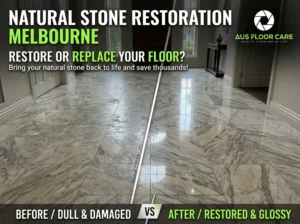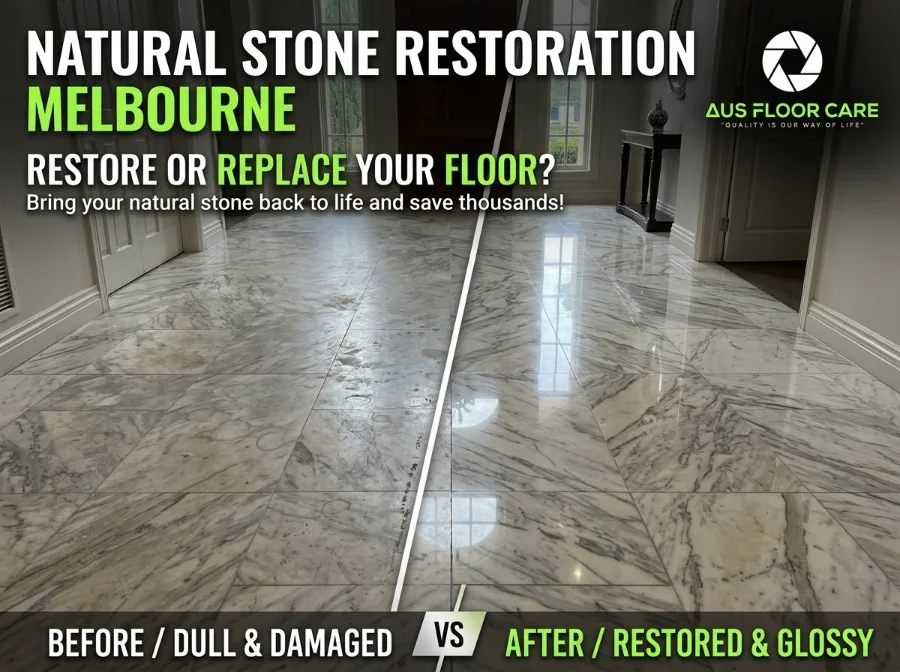
When a natural stone floor becomes dull, scratched, stained or uneven, replacing it can seem like the obvious solution. But removal is not always necessary. In many cases, professional restoration may improve the existing surface and preserve the character of the original material.
The right decision depends on the condition of the stone, the depth of the damage, the installation and the result you want to achieve.
When Restoration May Be the Better Option
Restoration may be worth investigating when the stone is structurally sound but has surface-level wear, dullness, embedded dirt, etching or scratches that can be treated.
Cleaning, honing and polishing can improve suitable surfaces, while grinding may be considered for certain uneven areas or deeper surface defects. Repairs may also address localised chips, holes or damaged sections.
Keeping the existing floor can avoid the disruption of removing and disposing of the material, although the scope and cost of restoration still need to be assessed.
When Replacement May Be Necessary
Replacement may be more appropriate where tiles are loose or extensively cracked, the substrate has ongoing movement, water damage is unresolved, or the material has deteriorated beyond practical repair.
Repeated structural movement should not be treated as a cosmetic issue. Installing a new finish without addressing the underlying cause may lead to the same problems again.
Some floors also have previous coatings, incompatible repairs or extensive damage that make restoration impractical. A site assessment helps clarify these limitations.
What Professional Restoration Can Achieve
Depending on the stone and its condition, a restoration programme may include deep cleaning to remove embedded dirt, grinding to correct certain surface irregularities, honing to refine the surface and reduce visible scratches or etching, and polishing to restore a selected sheen on suitable stone types.
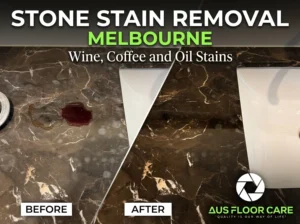
Repairs may address suitable chips, holes, cracks or localised damage. Sealing can help reduce absorption on suitable porous stone after preparation, but it cannot make every surface stain-proof.
Compare the Practical Considerations
- Condition: Is the damage limited to the surface or does it affect the installation?
- Material: Can the existing stone be safely restored?
- Disruption: How much access, noise, dust control and downtime would each option involve?
- Matching: Can replacement stone be matched to the existing colour, veining and finish?
- Long-term care: What maintenance will the restored or replacement floor require?
- Budget: Compare the full scope of each option, including repairs and preparation.
A clear assessment should set out the likely result and limitations before work begins.
Why the Stone Type Matters
Marble, granite, travertine, limestone, bluestone and terrazzo have different compositions and finishes. A treatment suitable for one material may be inappropriate for another.
For example, marble can be etched by acidic products, while travertine may have cavities that need attention. Terrazzo restoration may involve refining the binder and aggregate together. The stone type and finish should guide the method rather than a one-size-fits-all process.
Get an Assessment Before You Replace
Aus Floor Care provides natural stone cleaning, grinding, honing, polishing and restoration throughout Melbourne. We can inspect the floor, discuss the visible issues and explain whether restoration is a practical option or replacement should be considered.
Explore our stone restoration services and stone polishing services. Share your suburb and photos of the surface to request a quote.


 Trustindex verifies that the original source of the review is Google.
 Trustindex verifies that the original source of the review is Google.
 Trustindex verifies that the original source of the review is Google.
 Trustindex verifies that the original source of the review is Google.
 Trustindex verifies that the original source of the review is Google.
 Trustindex verifies that the original source of the review is Google.
 Trustindex verifies that the original source of the review is Google.
 Trustindex verifies that the original source of the review is Google.
 Trustindex verifies that the original source of the review is Google.
 Trustindex verifies that the original source of the review is Google.
Stone types we Serve
What We Provide
Areas We Serve Across Melbourne